

Build healthy relationships to prevent VAWG

Build healthy relationships to prevent VAWG
Case Studies


Spotlight Initiative worked with Muslim religious leaders – and in partnership with Tajikistan’s State Agency Committee on Religious Affairs and the Regulation of Traditions, Celebrations, and Ceremonies (CRA) to shifting attitudes, practices and norms to improve gender equality, promote healthy relationships, promote sexual and reproductive health and rights, and prevent gender-based violence (including domestic violence and early marriage). It trained 540 male religious leaders, including Imams using the ‘Healthy Lifestyle’ handbook and encouraged them to address these issues in sermons and through their conflict resolution and mediation work with families and heterosexual couples. The programme engaged directly with verses in the Quran around gender equality and was designed to be culturally relevant in the context. Through this process, religious leaders were able to advise couples in creating a family in accordance with spiritual and family values consistent with the canons of Islam, as well as the state and international human rights standards. Through the programme, Friday Prayer sessions were devoted to the topic of preventing domestic violence.
Through the programme, there were testimonies of religious leaders dealing more equitably with marital conflict, listening to both the woman and the man, and supporting them to identify and address the root causes of the conflict and avoid the use of violence. Spotlight Initiative activities also successfully adapted, recognising that in-laws can also be involved in family conflict and violence and should be included in processes.
Following Spotlight Initiative's closure in Tajikistan, stakeholders report that religious leaders continue to draw upon the materials developed through the programme. In 2024, more than 60,000 people were reached via social media videos developed with Imam Khtaibs (members of the Tajikistan Ulema Council - a former Spotlight Initiative partner), highlighting women's valuable role in society, the importance of girls' education and EVAWG messaging.
Read more: Spotlight Initiative Compendium of Innovative and Good Practices and Lessons Learned


In Mali, Spotlight Initiative supported the establishment of 829 model husband clubs for married men aged 20-40 (Club des Maris – CDM) and men planning to marry, aged 14-24 (Clubs des Futurs Maris – CDFM). A Model Husbands club is a voluntary space that brings men together to collectively reflect and take action to become a model husband. The clubs were designed to be participatory, open spaces for discussion, and promoting the shared values of active listening, equality and respect. The model husband clubs were sites of thematic sessions and discussions, led by men in the group, to encourage the group to reflect on their own behaviours, gender norms, positive masculinities and inequalities. Sessions also covered what it means to be an ally of women and girls to support them in pregnancy, reduce maternal morbidity, mortality and prevent all forms of GBV including child marriage and domestic violence. Sessions were designed to support men to become advocates and to take positive action which promotes women’s and children’s rights.
Many model husbands have become powerful forces for change in communities where they are operating, raising awareness of women’s and children’s rights and even preventing domestic violence and child marriage in some communities. A man from one model husband club shared: "I confess that the actions of this project have already paid off because, in our village, every night, there is at least one woman who cried under her husband's baton. It's been more than three months since we heard this."
While these clubs have been beneficial, a key learning has been the amount of time it takes to address attitudes and social norms that underpin traditional practices and the importance of involving religious leaders in this work.
Read more here: Spotlight Initiative Compendium of Innovative and Good Practices and Lessons Learned; Spotlight Initiative Mali Final Report.

Spotlight Initiative (led by UNICEF), in partnership with faith-based organisations (FBOs) and civil society organisations (CSOs), launched the Parenting for Childhood Development (P4CD) programme in six provinces of Papua New Guinea. The P4CD consisted of a series of training workshops for parents and caregivers of children aged 3-10 years in the selected communities based on a curriculum adapted for the context. Spotlight Initiative reached over 23,000 people through this activity.
Six modules were delivered over 6-12 weeks and covered the following topics: educating parents on children’s development and behaviour; providing them with practical knowledge on how to better take care of children; and building skills to discipline without corporal or physical punishment and emotional abuse. Participating parents received a certificate after completing the training. These workshops were delivered by trained community parenting facilitators – women and men from the communities including parents and schoolteachers. A key learning was the importance of applying a collaborative, non-judgemental approach with parents.
The initial programme was evaluated from 2018-2021 using a theory-driven evaluation approach with baseline (2017) and endline (2021) surveys, key informant interviews and focus groups, as well as the use of monitoring data and secondary data sources. Results show that P4CD improved parents' attituds towards their children, as well as contributed indirectly and directly to the reduction of IPV. It also strengthened parents' communication, knowledge and skills which led reductions in violence, abuse and neglect of children:
- 77% of parents targeted by the programme said that they had not hit their children in the past 3 months, compared to only 8% before the intervention.
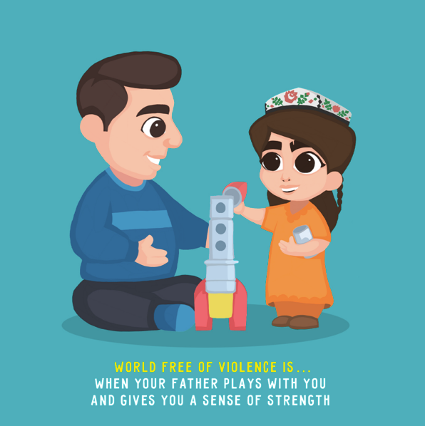
- 81% of fathers targeted by the programme said they spent time together with and playing with their children, compared to 40% before the intervention.
- 56% of fathers targeted by the programme said that they had not hit their wives in the past 3 months, compared to only 18% before the intervention.
- Qualitative data confirmed examples of positive changes in relationship quality between parents and children including better communication and listening, use of positive discipline and more men taking care of their children. There were also impacts on couples’ communication skills with better problem-solving and increased mutual respect. In addition, the number of men who attended training gradually increased during the period.
You can read the stories of 5 parents here. The evaluation also made recommendations for improving the programme, including more consistent implementation across communities, deeper facilitator training to further support parental communication skills, a stronger focus on parenting children with disabilities, and integrating more gender transformative elements and child rights material into the curriculum.
Sources: Spotlight Initiative Compendium of Innovative and Good Practices and Lessons Learned, UNICEF (2021) Evaluation of the UNICEF Parenting For Child Development Programme; Spotlight Initiative Papua New Guinea Final Report