
Support social empowerment to help prevent VAWG

Support social empowerment to help prevent VAWG
Case Studies


Spotlight Initiative in Malawi supported a Safe Space Mentorship Programme (SSMP). The programme supported girls and young women from 10 to 24 years old, through a weekly programme that ran for 6 months, addressing sexual and reproductive health and rights (SRHR), gender-based violence (GBV), harmful practices, referral pathways, and life skills. It aimed to empower young women and girls to recognise that violence is illegal, a violation of human rights, and to build the skills to sensitively challenge harmful social norms and behaviours that perpetuate violence against women and girls (VAWG).
Led by UNFPA under Spotlight Initiative, the SSMP programme launched its mentor training in collaboration with civil society organisations. A total of 37,292 mentees graduated from the 473 safe spaces. Safe space discussions covered a range of themes from raising awareness of women and girls’ rights, challenging social norms, seeking justice and physical and mental health and well-being. The SSMP also aimed to support participants' formal education, economic empowerment, and build strong networks so that girls are able to support themselves and engage with leaders and decision-makers to claim for their rights, demand accountability from duty bearers and be part of decision-making processes.
“Now I know that I have the right to quality education, the right to freely express my opinion and that early marriage is not a solution – thanks to the safe space, because it has made me aware of my human rights.” 17-year-old mentee at Tilimbike Safe Community Space.
One of the key elements of the SSMP's success was its connection to existing community structures, such as youth peer groups and mothers’ groups. By leveraging these structures and engaging with traditional chiefs, the Safe Space model was also embraced by traditional leaders and seen as an integral part of the referral pathways for GBV survivors. This strategy allowed a feeling of community ownership over the spaces and contributed to its replicability by other districts, going beyond Spotlight Initiative's geographic area of work.
Read more about Tilimbike Safe Community Space in Malawi, and its impact on mentees.
Source: Spotlight Initiative Compendium of Innovative and Good Practices and Lessons Learned


Spotlight Initiative, with World Vision and the national CSO Psychosocial Recovery and Development in East Timor (PRADET), designed and tested a model for empowering and providing psychosocial support to girls and adolescents who are survivors or at risk of sexual gender-based violence (GBV) in Timor-Leste. The process was informed by a mapping exercise in Ermera municipality, which sought to identify specialised survivor-centred services for adolescents outside of the capital, and involved 1,049 adolescents (522 boys and 527 girls) who provided insights on their specific sexual and reproductive health and rights (SRHR) needs. The mapping process informed a National Advocacy Workshop on Specialised Services, involving the government, civil society, and representatives from key marginalised groups.
Informed by best practice, and driven by the needs assessment and mapping of local GBV service gaps, the workshop resulted in a 12-session plan that focuses on developing adolescents’ knowledge and capacity in socio-emotional and life skills, sexual and reproductive health, gender-based violence prevention, financial literacy, career growth and development. As part of this, the plan also included long-term recovery and integration, including linking adolescent survivors with appopriate livelihood opportunities.
Sources: Spotlight Initiative Compendium of Innovative and Good Practices and Lessons Learned

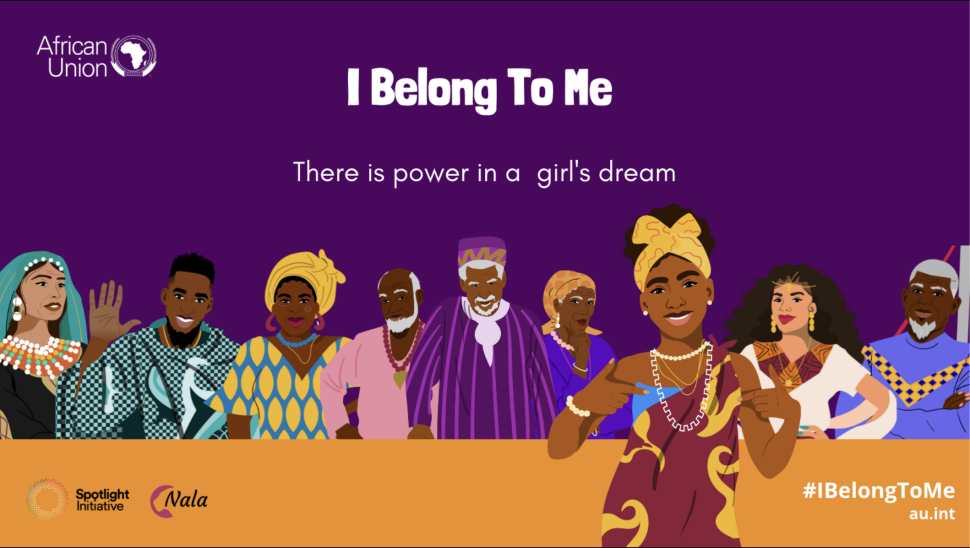
The guide “I belong to me” was written and illustrated by African women from different backgrounds and parts of the continent in Spotlight Initiative's Africa Regional Programme (first phase). It was designed to promote discussion between African parents and their pre-adolescent children around African culture and Harmful Practices, such as Female Genital Mutilation and Child Marriage. It follows the story of an 11-year old girl called Saleema who travels to different cities across the continent where the main African policies on girls and women’s rights have been adapted, in order for her to discover there is legitimacy and power in her voice. The book explains in simple terms concepts such as girls and women’s rights, bodily integrity and bodily autonomy.