
Meet the ‘hacktivists’ working to end tech-facilitated violence against women and girls

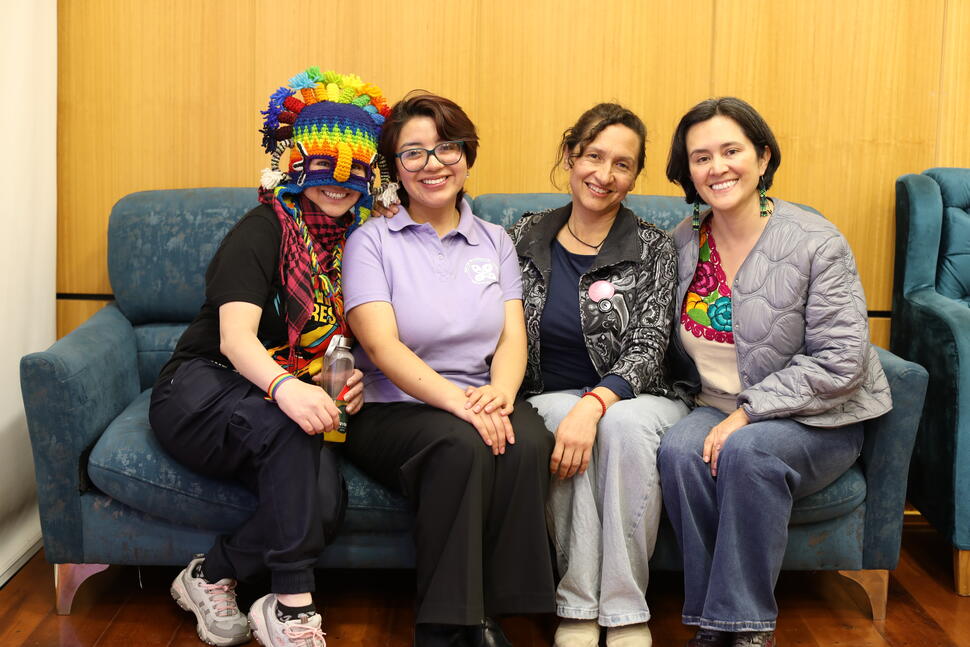
CUENCA, Ecuador – Rocío Gonzalez Toral is sitting in her studio, surrounded by computers and wearing a mask of the huma devil, a mythical figure in Ecuadorian culture. She is a systems engineer and feminist activist who develops new ways to prevent and address digital violence suffered by women in her city and across her country. Balancing her work in systems engineering with her activism, she understands that technology is also a tool for care and support.
In Ecuador, 37 per cent of adolescents and people under the age of 25 have experienced online harassment and other forms of digital violence.
She says that the Covid-19 pandemic changed her life. It was during this time that Rocío began to meet fellow activists online and they organized to join the International Women's Day march in Guayaquil. Later, they founded the Ecuadorian Feminist Circle, now active in both Quito and Cuenca, to support action on women’s rights.
For Rocío, approaching technology from a rights-based perspective means asking how to prevent violence that occurs in digital spaces. According to research by UN Women’s Safe Cities programme in Ecuador, 37 per cent of adolescents and young people under the age of 25 have experienced online harassment and other forms of digital violence.
The silence of digital violence
In early 2026, Rocío joined support groups for survivors of violence organized by the María Amor Foundation in Cuenca. She was struck by the pervasiveness of digital violence.
"They’d come to me in secret, as if what was happening to them were a sin.” - Rocío Gonzalez Toral, Hactivist
“Many of the women, upon identifying me as the IT person, would ask me questions. These weren’t questions about how to hack an ex’s Facebook or how to fix a printer. Instead, they’d say, ‘My boyfriend has an intimate photo of me and is blackmailing me — what can I do?’ or, ‘Do you know I’m getting nasty messages from different users and I don’t know how to get rid of them?’ That made me wonder: What’s happening in the digital world, and why don’t girls talk about it? Why don’t they speak up? Because they’d come to me in secret, as if what was happening to them were a sin.”
A network to combat online threats
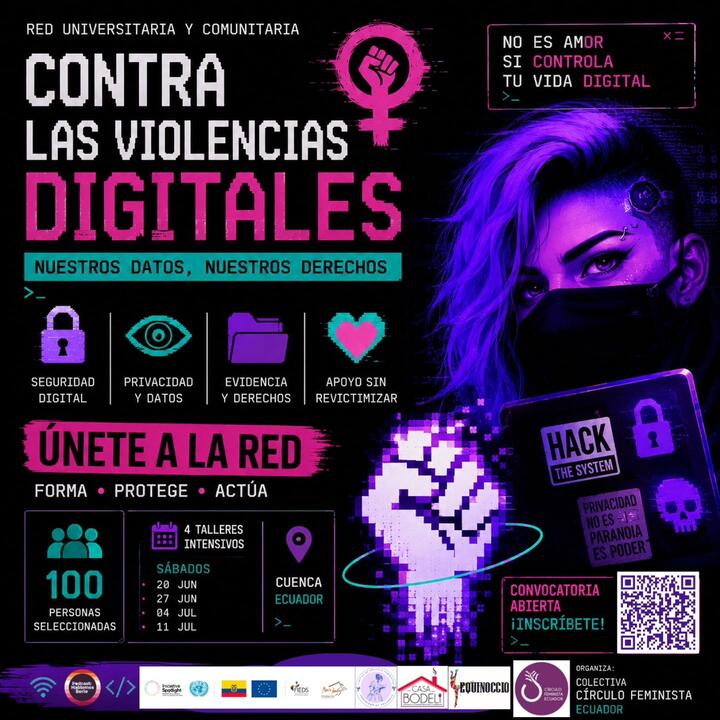
As part of the Spotlight Initiative in Ecuador, the María Amor Foundation implemented the 'Together for the Prevention of Violence Against Women' programme with the goal of strengthening the capacities of civil society organizations (CSOs) in the region. As part of that process, Rocío and her colleague from the Ecuadorian Feminist Circle, Eva Peña, led advocacy on digital violence for female students at the University of Cuenca. Almost 160 young women participated in eight sessions, but the work didn’t end there.“Talking with our comrades, we asked ourselves, ‘What do we do? How do we keep this going? There has to be a network against digital violence, where we train people so that every day, more people can access information and know what to do when they experience violence.’”
That’s how the Network Against Digital Violence was born. Thirty university students who received training are currently part of the network. Even in its early stages, the initiative is already exploring new training opportunities, including a strong focus on mental health, and has implemented a system for referring cases to mental health professionals and legal aid services.
Policy advocacy from the heart
Rocío stresses that legislation on tech-facilitated violence must keep pace with technological changes, including artificial intelligence and the prevalence of deep fakes, and be developed in partnership with gender specialists. This is one of the reasons she participates in policy-making forums, including working groups for the draft Organic Law to Prevent and Eradicate Gender-Based Digital Violence against Women in Ecuador, which was submitted to the National Assembly in September 2026.
The Ministry of the Interior developed the proposal with technical support from UN Women Ecuador and input from public institutions and civil society and the bill opens up the possibility of an institutional response to digital violence.
In the meantime, activists like Rocío will continue their work towards a world where women can live free from violence in every space, both online and offline.
By Ana Nájera Erráez

