
"When you have enough support, you can be anyone" - How Spotlight Initiative is helping Malawian girls to rewrite their future

NTCHISI DISTRICT, Malawi - At just 14 years old, Thabisa Msakwiza’s childhood was suddenly disrupted. After becoming pregnant, she was forced into marriage — instead of going to school and dreaming of her future, she became a wife and mother.
Her story is common across Malawi, where more than 46 per cent of girls are married before their 18th birthday. Taboos surrounding pregnancy out of wedlock, social norms and poverty can all contribute to child marriage. When a family is struggling to survive, some parents believe it is "better if [girls] get married, so that they've got less children to feed," Thabisa explains.
This has made Malawi a front line in the fight for girls' futures. Crises, including the COVID-19 pandemic and devastating cyclones, have pushed vulnerable families further to the brink, triggering a surge in child marriages and gender-based violence.
Thankfully, Thabisa was not left to deal with her situation alone. When members of a local Community Victim Support Unit (CVSU) heard what had happened, they approached Thabisa and helped her to have the marriage annulled. They also supported her re-enrolment in school and introduced her to a Spotlight Initiative Safe Space, where girls can learn from mentors about their rights, build connections and support one another.
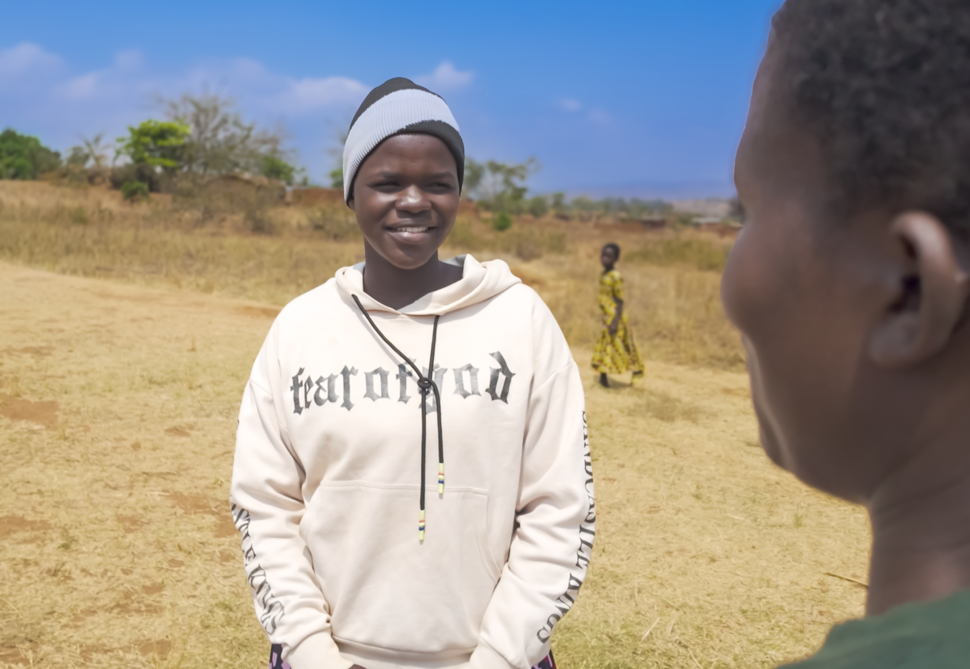
Finding her voice
"When I realized that there was a safe space... I felt so secure," recalls Thabisa, now a confident 21-year-old. Surrounded by peers who understood her, she was able to speak freely without fear of judgment. Counselling allowed her to process what had happened and she learned a crucial truth: her early marriage was a violation of her human rights, not a personal failure.
Thabisa is just one of many survivors reclaiming their lives. During the implementation of Spotlight Initiative in Malawi, more than 37,000 mentees graduated from almost 500 Safe Spaces across the country. Thanks to relentless community advocacy and improved support networks, almost 1,600 child marriages were annulled.
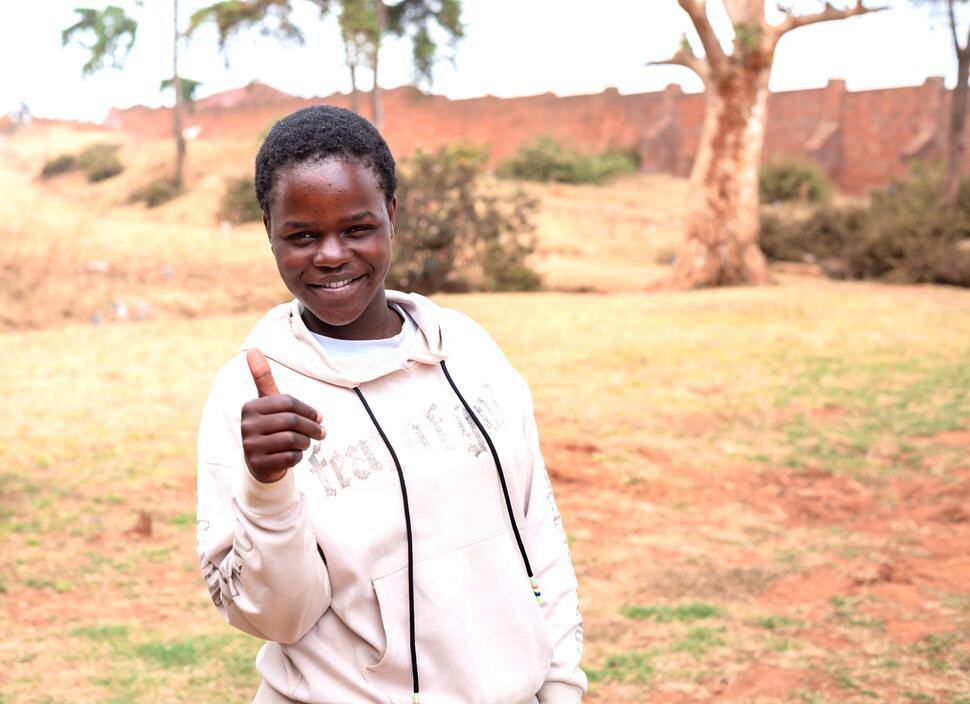
Planting the seeds of independence
Recognizing that without a way to support themselves, many survivors are forced to return to their abusers, Spotlight Initiative supported Thabisa with school fees and a seed grant of 100,000 Kwacha to launch a business. She started a tomato-selling business. Today, the profits allow Thabisa to continue her education and pay for her child's schooling.
Thabisa’s resilience reflects the profound systemic change sparked by the first phase of Spotlight Initiative. Backed by a $28.5 million investment from the European Union, the programme united UN agencies, government ministries and 39 civil society organizations to address the root causes of violence. Focusing on six high-impact districts, the initiative established Survivor and Community Funds to kickstart income-generating activities for vulnerable women. To ensure no girl or woman was left behind, the programme distributed motorbikes and bicycles so social workers could reach the most remote villages, and set up National and District Data Observatory Hubs to track and respond to abuse.
Importantly, the Initiative changed the law. Malawi’s Penal Code was officially amended in 2023 to legally define a child as anyone under the age of 18.
Yet, the fight is far from over. Thabisa now uses her voice to implore leaders to act with urgency: "Strengthen laws that make it illegal for young girls to get married... implement these laws and protect the rights of girls all over".
Her plea is the driving force behind the Spotlight Initiative Africa Regional Programme. Building on the foundational successes of Phase 1, the programme aims to ensure that hard-won legal frameworks are enforced. By holding institutions accountable, expanding digital and physical safe spaces, and amplifying grassroots women’s movements, the programme is working to ensure that the second chance Thabisa received isn't an exception.
"When you have enough support," Thabisa smiles, "you can be anyone you want to be".
By Serawit Atnafu - tesema@unfpa.org.