
How faith leaders are working to end human trafficking in the Oceanic Pacific

MELBOURNE, Australia - When Sister Margaret Ng told her neighbour she was working with survivors of trafficking, he was shocked that such a thing could happen in Australia. It’s an issue that’s rarely discussed in public, she says – and one that often defies people’s expectations.
While women and girls are especially vulnerable to exploitation, Sr. Margaret meets survivors from all walks of life through her work with the Josephite Counter Trafficking Project. “Human trafficking happens not only in sex work … I have met boxers, nurses, construction workers and cooks who were trafficked.”
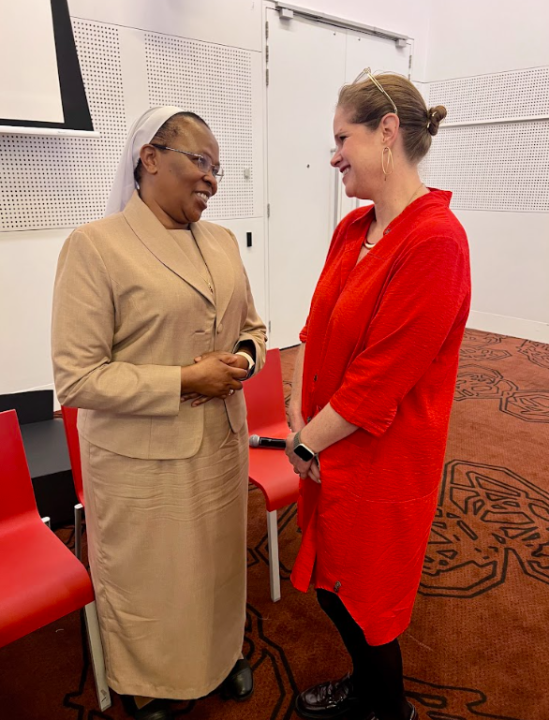
Across the Pacific, trafficking in persons is fuelled by migration, informal economies and gender inequality. Playing a trusted role in many communities, faith leaders are often the first to respond to this crisis. They support migrants, care for survivors and disrupt trafficking through community-based action.
During the Women Deliver conference in Melbourne, faith leaders and experts on ending violence against women and girls came together at ‘Strengthening Collective Action: Faith, Justice and Working to End Human Trafficking in the Oceanic Pacific’ to discuss how to close the gap between faith-led initiatives and formal justice systems.
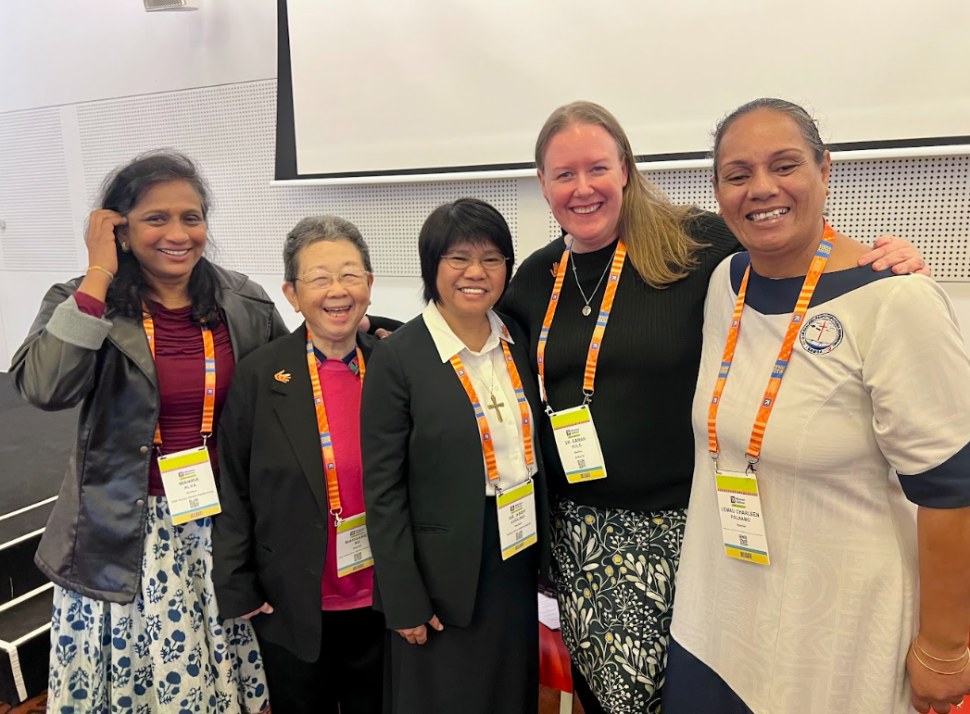
Speakers included Sr. Ng, Spotlight Initiative Global Coordinator Erin Kenny, pastoral counsellor Lemau Palaamo (Soul Talk Samoa, Congregational Christian Church Samoa, Spotlight Initiative Global Reference Group Member), Sister Abby Avelino (Talitha Kum), Sister Sarah Puls, (ACRATH) and Sister Jane Wakahiu (Hilton Foundation Catholic Sisters Initiative). The panel was organized by the Hilton Foundation Catholic Sisters Initiative and moderated by Ms. Manira Alva of Vital Voices.
Speaking about her work in Samoa, Ms. Palaamo said that creating a network of trained parasocial workers within communities was critical, as was offering ongoing support and care. In most cases, this includes skills training to ensure survivors can earn an independent income. “We are constantly following up with those who have been in grief, traumatized – even 10 years ago. We still give them a call and say, ‘How are you?’ They've gone on their way, stepped out, been empowered, and some are actually businesswomen now.”
Sister Jane echoed the importance of skills training in supporting survivors to reclaim their futures. “I asked [one woman], ‘What do you care to do in life?’ It was a question she had never been asked,” said Sr. Jane. “She wanted to be a beautician – to make other people feel beautiful. In six months she was put in skills training. Now, she has an apartment, her children have a house, and she is working. When I met with her, I could see the change.”
Sister Abby Avelino said that one of the challenges of prevention is that women and girls may be trafficked by people they know and trust. “Women will say, ‘I didn’t know my aunt could do this to me.’ It's a familiar story.” On top of this dynamic, uncertain migration status often made survivors reluctant to go to authorities. In these situations, faith leaders can provide a critical link between survivors and the justice systems, she said.
Spotlight Initiative Global Coordinator Erin Kenny spoke about how Spotlight Initiative had partnered with journalists and media outlets to help women migrant workers better understand their rights through its Safe and Fair programme in South-east Asia. “Survivors can be so isolated from any other human connection, they may not know that there’s a service for them or another opportunity for care… As we were building this network of essential services for survivors, we brought the media in to help us promote the services and to destigmatize trafficking survivors.”
Sister Sarah Puls also touched on the power of storytelling. “The connection that I have with the stories of people we support brings insight to partnerships that wouldn’t be there otherwise… Governments have the resources, but they don’t have the trust.”
Sr. Sarah said this made collaboration essential to ending trafficking. “It’s so important to recognize that together we can achieve much more,” she said. “Coalitions and partnerships between organizations mean that the real, lived experience on the ground can make it into the rooms where decisions are made.”