
“If people without disabilities can do it, we can too” – the Samoan activists working to create violence-free communities

APIA, Samoa - It’s a quiet afternoon in Apia and the stores and offices inside Nia Mall have closed for the day – all except one. Inside this arcade is the headquarters of Nuanua O Le Alofa (NOLA), Samoa’s national advocacy organization for people with disabilities.
Mataafa Faatino Utumapu – “Tino” to her colleagues – is NOLA’s General Manager. “The mission of our organization is to create, facilitate and empower persons with disabilities to participate fully in all aspects of society, and to ensure that the community recognizes their capacity,” says Ms. Utumapu.
As a blind woman, Ms. Utumapu knows how critical it is to ensure that people with disabilities understand their rights and can access the same work and development opportunities as those without disabilities.
Often, she says, women and girls with disabilities face two layers of discrimination because of both their disability and their gender.
“As a young [disability support] coordinator, I experienced multiple discriminations,” Ms. Utumapu explains. “People spoke to my assistant instead of me. The office key was given to my assistant, who did not have a disability … Members visited the office and did not want to interact with me.”
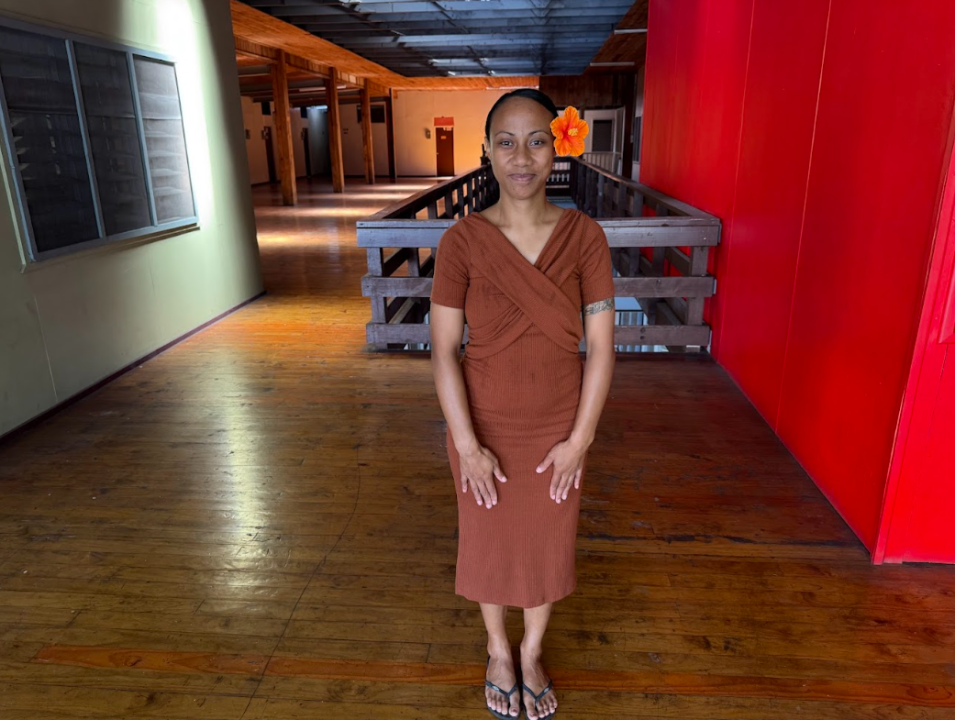
Leading the way
With support from Spotlight Initiative, NOLA organized the first leadership forum specifically for women and girls with disabilities on the island of Savai’i in 2022. They aimed to hear directly from women on the underserved island about their needs, and to support them to advocate confidently for their rights.
“We ensured Spotlight Initiative activities responded to their needs by creating information in accessible formats, providing sign language interpreters at all programmes and translating information into pictorial formats for colleagues with intellectual disabilities,” says Ms. Utumapu.
"Inclusion should not be a one-off project but part of everyday life." - Mataafa Faatino Utumapu, NOLA General Manager
They also worked with other civil society organizations to host community dialogues that sensitized society at every level on the rights of people with disabilities. “The aim was to help everyone recognize that women and children with disabilities are not different; they are part of the community ... Their inclusion should not be a one-off project but part of everyday life,” she says.
Suria Tapala, Vice President for the NOLA Women's Committee, says she has felt the impact of these engagements in her village: “One thing I always heard from them is that I'm a sick person. I have to stay home. But now that's starting to fade away. People respect and encourage me when they see me coming to work. That's the change in attitude of people in my community.”
Changing the narrative
NOLA is shifting the way that society views women with disabilities, but it’s also changing the way that women and girls see themselves.
Miracle Afele, 29, says these activities had a profound impact on her ability to speak up for herself and others. “We've been able to advocate and explain to our families the importance of their role, the challenges we've been facing and what we need, so they have the knowledge and understand how to support us,” she says. “I've learned about different types of violence. And growing up, I wasn’t taught about those things.”
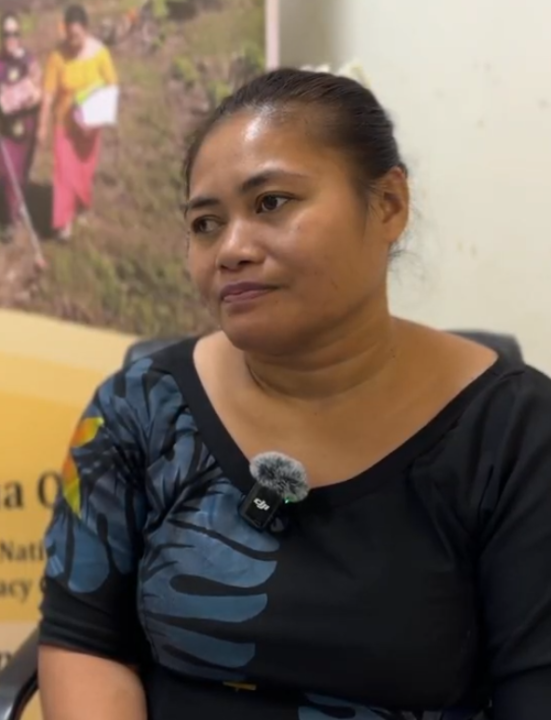
This represents a critical knowledge gap, given women and girls with disabilities are at least two to three times more likely than other women to experience violence. “Violence is a big subject that needs to be discussed within our community,” says Ms. Afele.
Ms. Afele took her message of inclusion to the national stage in 2023, becoming the first deaf woman to take part in the Miss Samoa pageant. “It was the first time a woman with a disability competed. It wasn't an easy decision, but I was able to make it because being involved with those programmes gave me courage. I was hoping it would be a way to break some of the barriers and show that women with disabilities are capable.”
Her participation attracted national coverage and provided a platform to talk to a mainstream audience about the challenges faced by women and girls with disabilities.
Out of the limelight, Ms. Afele is employed by Women in Business Development to ensure women with disabilities are included in entrepreneurial initiatives such as weaving and agriculture.
Ms. Tapala is also working towards social transformation. She helped to pilot and then rollout basic social protection payments for people with disabilities, with support from the UN Joint Sustainable Development Goal Fund and in partnership with the government.
“Families would be able to provide some extra support for the high-need persons with disabilities and buy the things that they need, like diapers and medicine. Some parents will be able to put their children back in school with the support of the disability allowance… This supports them with food and everyday needs,” she says.
Above all, she hopes that she can help women and girls with disabilities “to always believe in themselves and always move forward. If people without disabilities can do things, we can do it as well,” says Ms. Tapala
Ms. Utumapu is equally determined. “Achieving a violence-free environment is not something you wait for, it is something you work for,” she says.
By Anne Fullerton