
New momentum for African women and girls: The Gambia ratifies the AU Convention on Ending Violence Against Women and Girls

ADDIS ABABA, Ethiopia - The Gambia's National Assembly unanimously approved the ratification of the African Union Convention on Ending Violence Against Women and Girls (AU-CEVAWG) on June 9, 2026. This ratification makes the West African nation first to ratify and places it at the fore in demonstrating continent-wide leadership on EVAWG.
The Gambia’s Gender Minister, Hon. Fatou Kinteh, presented the motion, calling the ratification a historic milestone. Addressing the Assembly, the Minister highlighted the varied nature of gender-based violence, which includes domestic abuse, child marriage, female genital mutilation and online harassment.
The Gambia is expected to formally submit its instruments of ratification to the African Union Commission (AUC), formally making it the first African nation to ratify the treaty. The move adds crucial energy to a 20-year effort for women’s rights.
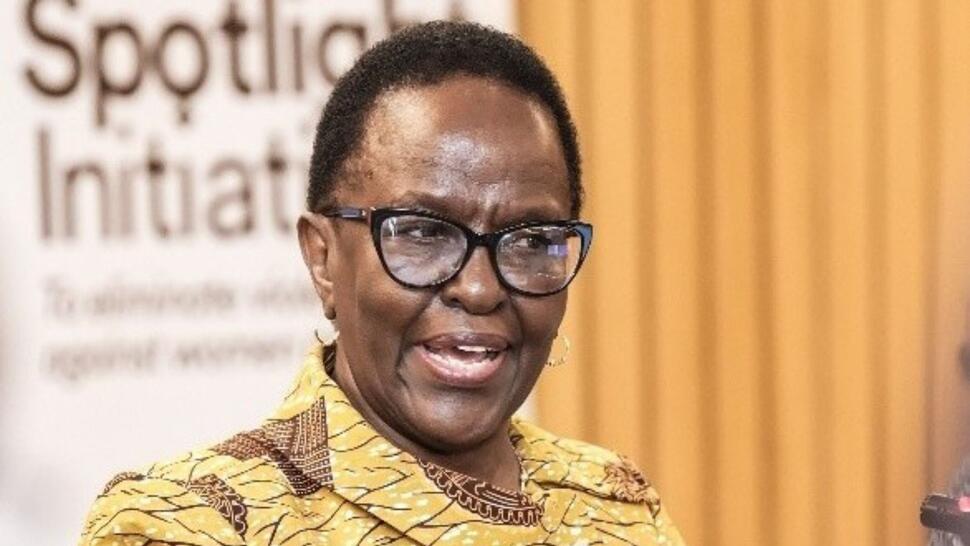
"I call on all Member States to ratify and fully implement the Convention, backed by strong accountability, adequate resources and survivor-centered policies." H.E. Amb. Liberata Mulamula (AU Special Envoy for WPS).
The 20-Year Struggle from the Maputo Protocol to AU-CEVAWG
More than 20 years ago, the African Union adopted the landmark Protocol to the African Charter on Human and Peoples' Rights on the Rights of Women in Africa, known as the Maputo Protocol. This protocol set a strong vision for women's rights. However, enforcing the elimination of violence against women and children and harmful practices has faced challenges. Structural barriers, institutions focus, and negative gender social norms have all contributed to these challenging circumstances.
As a result, millions of African women and girls continue to face risks of domestic abuse, harmful practices - including female genital mutilation, early and forced marriage, sexual violence in conflict and humanitarian situations, workplace harassment, and attacks in public and online spaces. Recognizing this urgent need, the Convention on the Elimination of Violence Against Women and Girls was adopted at the 38th Ordinary Session of the AU Assembly in February 2025.
Elevating National Foundations to Continental Standards
The AU-CEVAWG is Africa’s continent-wide legally binding instrument, with a singular focus on the elimination of violence against women and girls in Africa. It aims to improve protection mechanisms, access to justice, and institutional responses.
The Gambia signed the convention on July 11, 2025. The country has a strong legal foundation supporting efforts to end violence against women and girls. This includes the Domestic Violence Act, the Sexual Offences Act, the Children’s Act, and the Women’s Amendment Act, which prohibits female genital mutilation. These laws position the nation to lead in adopting these new continental standards. As Minister Kinteh highlighted, the AU convention builds on this foundation by turning goals into binding legal duties and ensuring national laws match Africa’s rights framework.

"The Gambia has shown Africa that ending violence against women and girls is a responsibility to be acted upon. Commitments must now translate into concrete legal, institutional, and budgetary action. Dr. Costly Aderibigbe-Saba (CSRRG Member)
What Comes Next for the Convention?
While The Gambia has made an important first step, signatures only show intent. For the AU-CEVAWG to take effect, it needs at least 15 Member State ratifications. Once it is active, ratifying States must report regularly on their progress. To help with this transition, the African Union recently launched AU-CEVAWG Roadmap for Signature, Ratification, Domestication and Implementation. This roadmap gives a clear framework for moving from signature to full implementation.

"I encourage all AU Member States to ratify the Convention without delay and invest in its effective implementation, ensuring no woman or girl is left behind." Ngwenya Nonkululeko Prudence, Director, Women, Gender and Youth Directorate, AU.
How Spotlight Initiative supports the movement
The €20 million Spotlight Initiative Africa Regional Programme (SIARP) partnership involves the AUC, the United Nations (UN) and the European Union (EU). Its goal is to end violence and harmful practices, and to strengthen sexual and reproductive health and rights across Africa. SIARP strengthens data systems and improves accountability within AUC and AU organs, including the African Commission on Human and Peoples' Rights and the African Committee of Experts on the Rights and Welfare of the Child. To challenge harmful social norms, it collaborates with the Council of Traditional Leaders of Africa and supports the AU’s Positive Masculinity Initiative. Importantly, to support local priorities, SIARP has allocated over 30 per cent of its funding towards civil society-led delivery, helping women’s rights and youth-led networks to lead action in the programme.
Africa’s blueprint lighting the way for global leadership
With the AU-CEVAWG, Africa will be set to accelerate leadership, investment and action that strengthen continental and global standards on protecting women and girls from all forms of violence. Reaching this goal on the continent will require the minimum 15 ratifications for the AU-CEVAWG to enter into force. With the ratification of the convention, Member States work to strengthen local laws, support grassroots services for survivors, and dismantle negative gender norms that perpetuate violence. And with a functional convention, Africa can effectively fight against the global backlash on women's rights. This can demonstrate to the world that strong, continent-wide leadership can eliminate deep-rooted violence against women and girls.