
Supporting young mothers in Malawi to return to school

MACHINGA DISTRICT, Malawi - In Malawi, 42 per cent of girls have experienced physical violence by the age of 18, and almost half have married and left school by their eighteenth birthday. The Spotlight Initiative Africa Regional Programme took a holistic approach to reducing violence and child marriage, and helping girls to complete their education.
This included legal and policy updates and working closely with communities, survivors and traditional leaders.
Between 2019 and 2023, more than 1,500 chiefs were trained to become champions of change, collectively annulling over 1200 child marriages. More than 600 girl survivors of violence received scholarships to help them complete school; and over 600,000 learners were taught to detect, report and access violence reporting mechanisms.
Below, two young mothers reflect on their return to school and a local chief explains why supporting girls' education is everyone's responsibility.
"The support of Spotlight Initiative and the Community Support Unit became my guiding light."
- SOPHIA*, 19
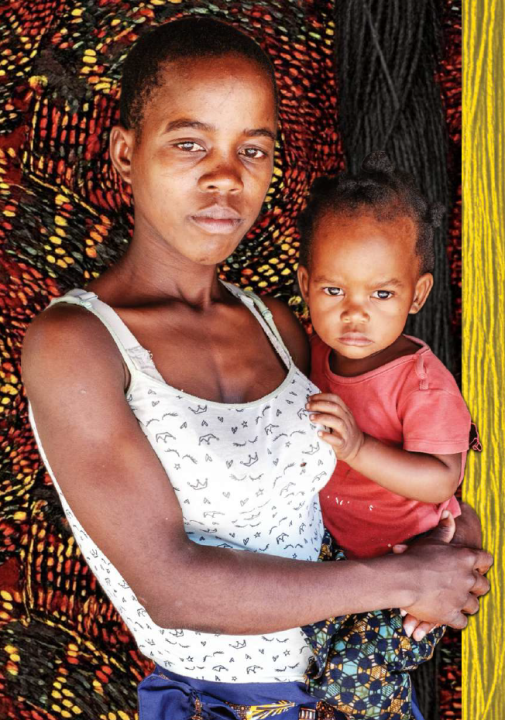
Life took an unexpected turn when I was 16. Schools had been closed due to Covid-19 and there was nothing to do. I became involved with a boy in the village. I didn’t have any knowledge of family planning. Classmates had told me contraceptives prevent you from becoming pregnant later in life.
Soon, the consequences of that relationship became clear: I was pregnant.
After this discovery, my mother was heartbroken. She insisted I must take responsibility and marry the boy. I spent a month living with him until my dad came to rescue me. Thanks to the intervention of our local chief, alerted by concerned neighbours who had been trained by Spotlight Initiative, they convinced me of the importance of returning to school.
It wasn't easy. Being the only pregnant student was isolating and humiliating. Before this, I witnessed lots of classmates dropping out due to similar situations. The support of Spotlight Initiative and the Community Support Unit became my guiding light.
Today, I am about to receive my Senior School Certificate. This journey wouldn't have been possible without the influence of the local chiefs and Spotlight Initiative. Their training not only corrected misconceptions about family planning and contraception but also ignited a passion within me to help others.
"I was able to pass the exam while I was seven months pregnant. I finished second."
- CHIKONDI*
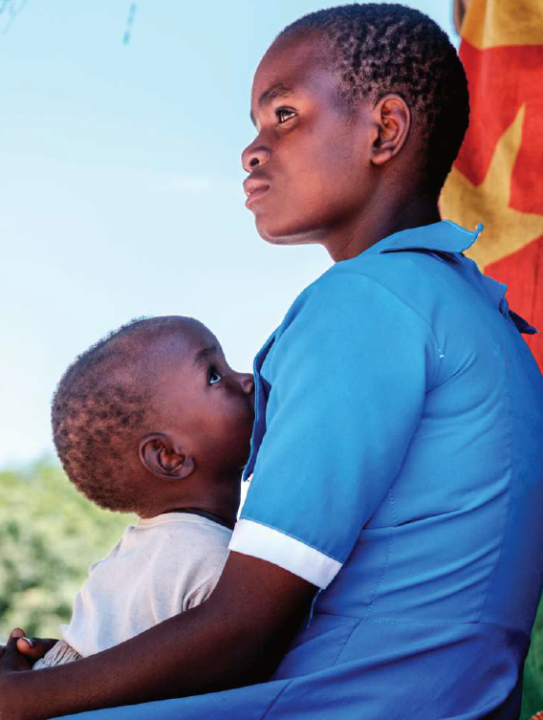
When I was 14 years old, I started a relationship with a 20-year-old man. I quickly became pregnant and tried to hide it but my sister, who works in the Community Victim Support Unit in our village, noticed my growing belly.
My mom was so upset about my pregnancy that she told me to leave and settle with my new husband. I was chased away, I dropped out of school in the middle of Grade 7.
A few weeks later, my dad decided to cancel the marriage and forced me to return home and go back to school. I was worried that my classmates would make fun of me. So I went to the Village Chief, who
asked the teachers to provide me with extra support. The Community Victim Support Unit gave me exercise books, and I was able to pass the exam while I was seven months pregnant. I finished second.
It’s still not easy. I breastfeed my child in the morning and then go to school. During the day, my daughter would stay with her grandmother, and I would take care of her after school. Deep down, at first, I was depressed about getting pregnant so young. I wasn't eating well and didn't know about contraception. I only learned about it recently at Spotlight meetings.
I’m now in Standard 8, the final year of primary school in Malawi. I want to become a journalist and focus on issues in our communities. At school, many girls know that I had a child. I tell them about the challenges I face in taking care of her because I'm so young. I hope they don't make the same mistake as me.
"There has been a notable shift in the mindset of the village chiefs."
- KIND MIZINGA RAJABU, 58, LOCAL CHIEF
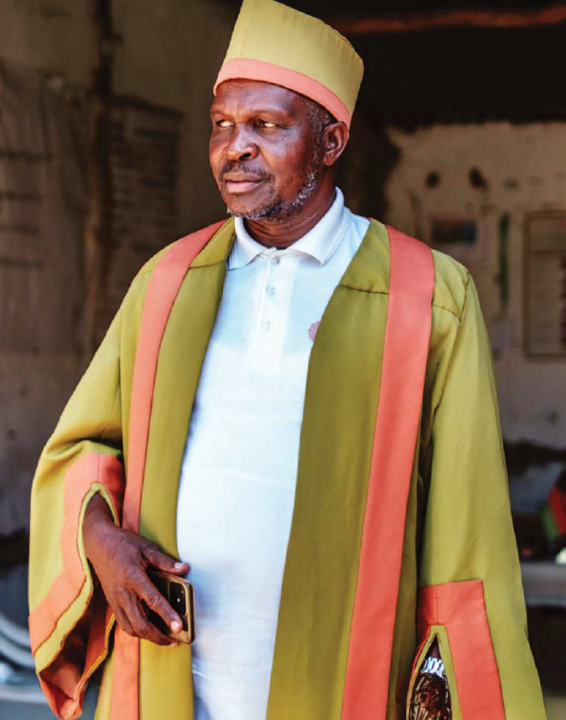
Covid-19 was chaotic for protecting our girls. The prolonged closure of schools has led to a surge in child marriages and teenage pregnancies. As community chiefs, we convened with parents, mothers' groups and teachers to address this alarming trend.
We have partnered with Spotlight since 2020. It became clear to us that parental education was crucial. We told them about the consequences of child marriage on their daughter's education, emphasizing recent legislative changes making teenage marriage illegal. Remarkably, parents began reporting instances of child marriages themselves, realizing the detrimental impact on their children's education.
At the time, local leaders acknowledged the gravity of the situation. There has been a notable shift in the mindset of village chiefs. Once proponents of early marriage and pregnancy to bolster village populations, they now understand the adverse effects on girls' well-being. I’m proud to say that we had zero child marriages in 2023, a significant milestone.
Mizinga community has undergone transformations in its practices. Harmful rituals such as "Sasa Fumbi", which forces teenage girls to have sex with a man in order to become a woman, have stopped. The tradition for widows to engage in intercourse 40 days after their husbands' deaths have also ceased.
*Name has been changed for privacy.
Extracted from 'Spotlight Initiative Africa Regional Programme: Stories of Change'.