
Anesi's story: From surviving child marriage to building a thriving business in Malawi

NTCHISI DISTRICT, Malawi - In a small village, about 90 minutes from Malawi’s capital of Lilongwe, 22-year-old Anesi gives a tour of her flourishing livestock business. She gestures to a goat and two kids, part of her growing herd, and the hen and chicks pecking outside her house.
“I know I’m young, but I know how to do business,” she says confidently.
As she talks, her young son watches from behind his grandmother's skirt, dressed in a sleeveless shirt, Spiderman shorts and black rubber clogs.
It’s a typical domestic scene, but one that felt impossible just 5 years ago.
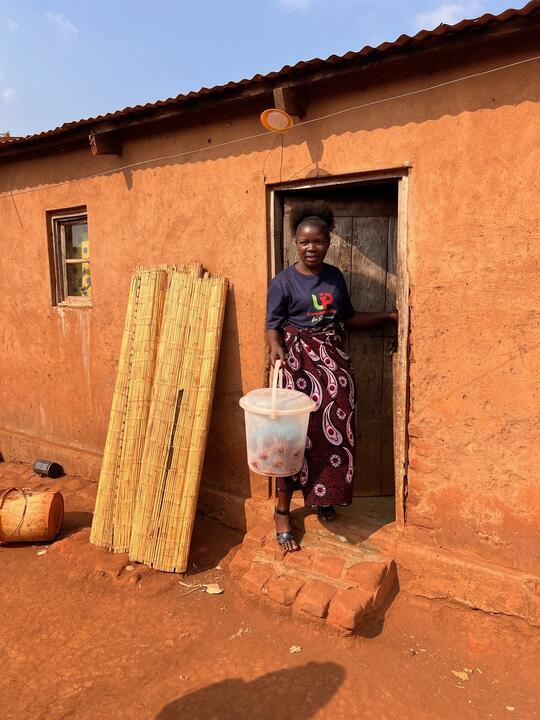
In 2021, amid Covid-19 lockdowns and school closures, Anesi became pregnant with her son. Despite being just 17 years old at the time, she did what was expected of her: she got married.
In Malawi, almost 40 per cent of girls are married before the age of 18 and 30 per cent have their first child before the same age.
It didn’t take long for Anesi to realize that this wasn’t the future she wanted. While she was still pregnant, Anesi was approached by the Child Protection Committee in her community, who had heard about her case. They worked with Anesi to secure her return home and to ensure that she would have the support she needed to raise her son.
“I was so happy to have Anesi back,” says her mother Theresa. “My wish was that she would go back to school.”
Despite the reunion, Anesi still needed a way to support herself and her son. That was when the committee referred her to the Spotlight Initiative-supported livestock pass-on programme. This programme is part of the Survivor Fund, a long-term approach to recovery from violence that helps survivors to rebuild their livelihoods and achieve financial independence. Participants receive initial livestock or capital, along with training on how to raise and manage their animals. Once the business is up and running, they pass on an agreed number of livestock to other eligible women and girls, ensuring the benefits reach more households.
“I’m happy that I’m able to take care of my child,” says Anesi. “And I’m happy that I’m helping other girls in the community.”
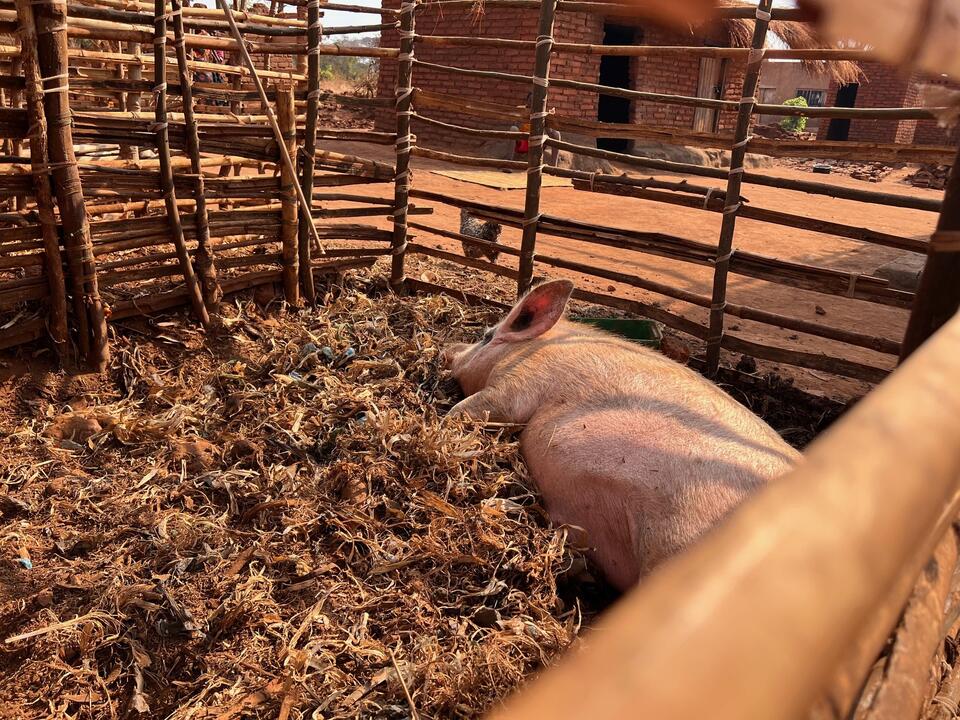
Since starting the business, Anesi has grown her herd to 12 goats, purchased a pig and started selling mandazi (fritters). In fact, she has just returned from selling mandazi at a local community event.
Her next goal: to expand the mandazi business and eventually own 50 goats.
She also hopes that the livestock pass-on programme will continue to support more girls like her.
“Spotlight Initiative should be expanded to other girls, other communities and other districts so that those girls can also see [what’s possible],” she says.


